In this recent YouTube short, one of my favourite climate change communicators, Niba Audrey Nirmal, talks about how rain in the Pacific Northwest will get more extreme rain events but those events will also be “sharper.” Take a listen.
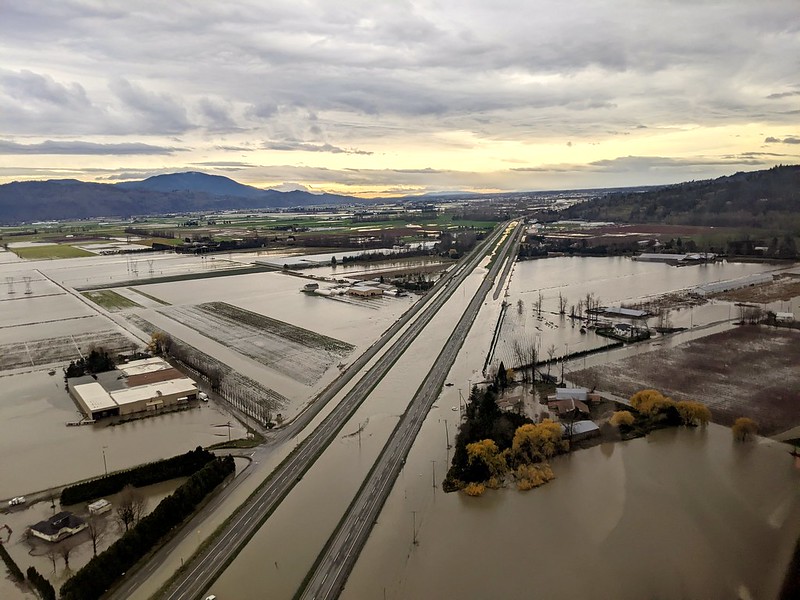
When we think about designing resilient systems, I’m always amazed how little climate change is talked about or how mild folks think the changes might be. The implications of more frequent and sharper rain events will compound many of the issues we have seen in the Pacific Northwest around erosion and flooding. With much of the Pacific Northwest now alternating between flooding and extreme drought, we appear woefully underprepared at nearly every level.
Extreme rain events don’t just impact our gardens, they impact our entire region and ecology. From washing away and obstructing vital riverbeds that salmon use as spawning grounds, to inundating human infrastructure simply not built for our 21st century climate realities, thinking about permaculture design in a changing climate requires some truly Herculean design thinking. Permaculture at its heart is a systems design approach and I have found it useful to think beyond the design for just one project site and beyond to the entire region where our design site lies. By ourselves, we cannot redesign an entire city or province but we can think on those large scales to begin to understand how adding a rain barrel or two simply isn’t going to amount to much if we’re trying to think 50 or 100 years in the future.
It is wild to me that after everything that has been thrown at the Pacific Northwest in the last few years, that most regions still don’t have climate change resilience plans. What plans exist still have a relatively short term view and assume very conservative climate changes. As we have seen, it actually doesn’t take much to wipe out a huge swath of human infrastructure. As ever, politicians and planners talk about “bringing business” and “being there for communities” but what happens when entire communities are decimated through wild fires and floods? We talk about saving industries that are largely responsible for the climate change, or at least their most damaging effects. What are we “saving” and for whom is a question I come back to a lot.
For us to really survive the coming decades, officials and citizens at all levels need to be talking and learning about the resilient ecosystems that existed here in the first place. Failing to do so consigns us all to an uncertain future with tools and infrastructure designed for a planet that no longer exists. And while we wait, farms and food producers the world over continue to struggle.


 Last Ditch
Leave a comment