
I was reading a chapter in Land Justice called ‘Urban Land-Grabbing and a Movement for Community-based control in Detroit’ which centres around public land being sold off to wealthy investors and it got me thinking about the major gaps in permaculture and food security conversations. In the book chapter, it talks about how investors claim to be “protecting” the land but end up developing it, while any green space created is usually reserved for the new wealthy tenants. For homesteaders, these land grabs can often play out on the individual level, as a well-meaning (often white) family comes in after a disaster or forced removal to “heal the land.”
Land rights, settler colonialism, and ethnic cleansing are not talked about often in popular permaculture or homesteading conversations. There is a litany of excellent scholarship and grassroots movements that are many decades old but of course those voices are often absent from the popular conversation. While people gleefully talk about “independence” and going off grid, millions of people around the world and in their own countries are being displaced by a variety of militaries and businesses who often work in tandem or are in effect the same thing.
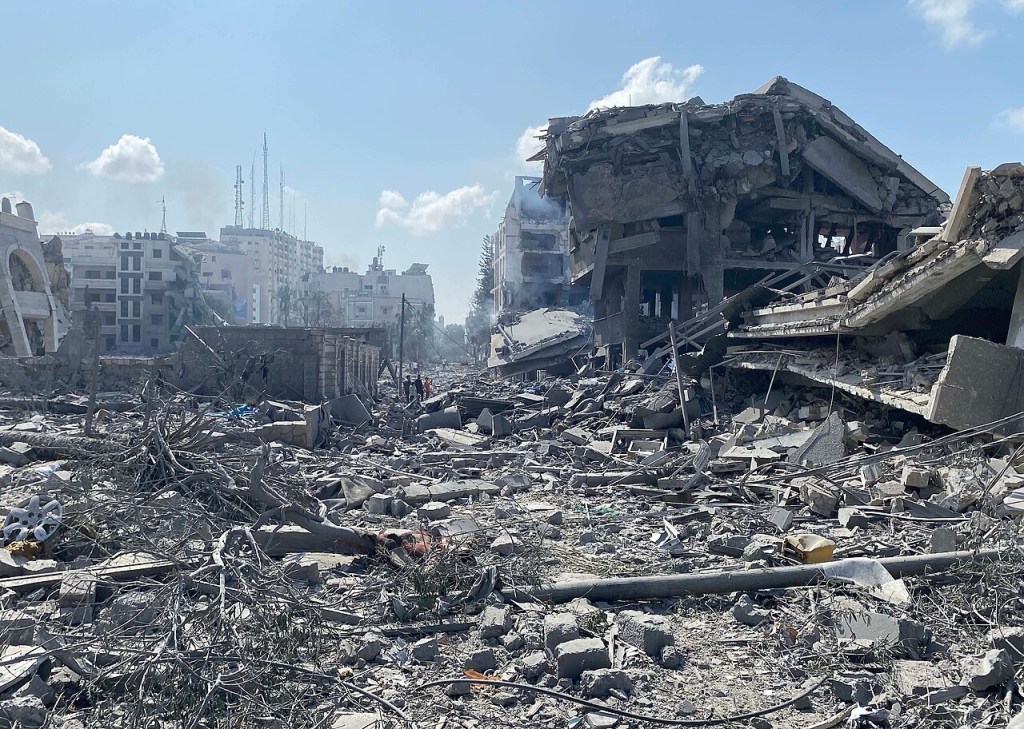
If we look at the mass displacement of Palestinians, the illegal settlements, the ongoing advertisement abroad of developing Gaza’s coast for settlers, we see that there is no sustainable future, no regenerative farming or other permaculture dreams, while people are being starved, forcibly removed from land, murdered, and having whole neighbourhoods bulldozed. While people are being driven from their land, developers, in collaboration with government, advertise new “opportunities” on land made empty by 2,000 pound bombs and bulldozers. Forced “population transfer” is a form of ethnic cleansing and illegal under international law.
We cannot only speak up when it is done by a country or actor with whom we disagree. If speaking up over the crime is somehow more punishable than literal war crimes, what rights, what security do any of us have? It might feel life a safe world while we are doing it to someone else but what will moving to a cabin in the woods accomplish when the tables inevitably turn? Governments have a long history of practicing land dispossession tactics at home to apply abroad, and vice versa.
Especially in the United States, many who are chasing the homesteading dream, are doing so in direct response to the failure of capitalism, food insecurity, and climate change. While these people think they are doing good in the world by becoming “sovereign citizens” or pushing against their perceived (and in some cases, real) oppression, they are in fact often another arm of colonization and land disenfranchisement. In another chapter in Land Justice, a section about the Great Recession lands particularly true as we stare down the barrel of yet another great economic upheaval:
A deeper history of profound structural violence underlies the presence of sovereign citizens in our watershed. Many of these settler colonists are, themselves, displaced persons. Most are cash poor and desperate to find an escape from perceived governmental oppressors. They have arrived because federal and state neoliberal policies created the greatest wealth inequality the nation has seen since before the days of the Great Depression. These are economic refugees of the “Great Recession.”
Land Justice. Pg. 133
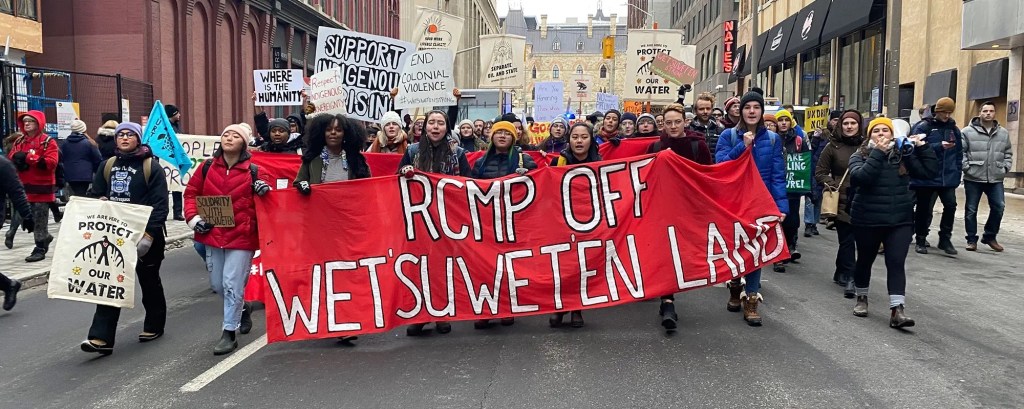
The chapter goes on to talk about the irony of the situation given that Indigenous people in the US have been resisting colonial power structures for centuries. And in Canada, the Wetʼsuwetʼen are just one example of many Indigenous people fighting land dispossession.
A question I often come back to is how do we practice permaculture or regenerative agriculture without contributing to displacement of people? I see the answer as by doing so in collaboration with those who have already been or are in danger of being displaced, centering their needs and following their leadership and direction. The movements exist, the work is already being done but what people need are resources and solidarity. Any “sustainable” future that is rooted in settler colonization is doomed to fail and just makes those who seek to get away from oppressive systems as an integral part of them. If you see “empty” land, ask yourself “who emptied it?” If we cannot speak up and call out forced removal of people from land, then what are we even doing here? What is our struggle?
I highly recommend the book Land Justice: Re-Imagining Land, Food, and the Commons in the United States as a starting point on this topic.


 Last Ditch
Leave a comment