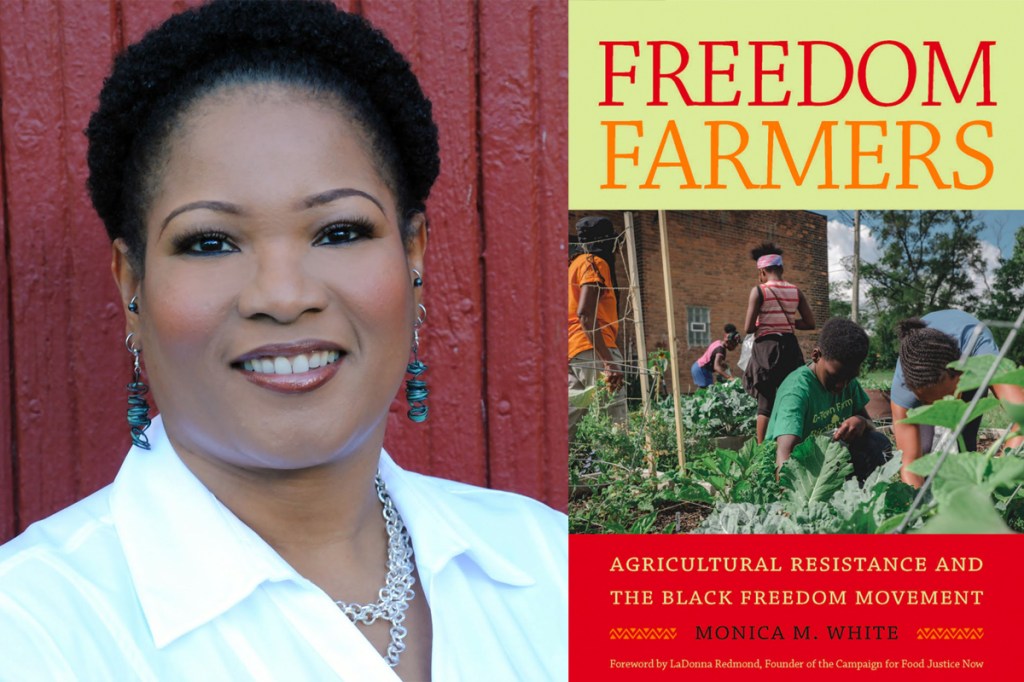
I just finished Monica White’s excellent book, Freedom Farmers, and wanted to share a little bit about it. I picked up a copy after reading Land Justice, and found myself painfully aware of how little I knew about black agriculture in the United States (and elsewhere). Permaculture and sustainable agriculture conversations are heavily saturated by white voices (including mine) and one of the most glaring gaps in the conversation is how all of the current buzzwords, fads, and fixations that are popular right now have their roots in Black and Indigenous traditions. Specifically, notions like “self reliance” often come from resistance movements, something that gets ignored and written out of our popular understandings of self-sufficiency.
As Monica White explains: “When black farmers in the South in the 1960s tried to vote and were not allowed to- and were evicted from their plots of land for making the attempt- the collective helped them respond to that crisis in a way that was profoundly political. In this sense, community resilience is a way for a community to absorb a disturbance and to reorganize itself while undergoing change.” (Freedom Farmers. 145)
Being largely ignorant to this important agricultural history, Freedom Farmers was the perfect choice as a starting point because it looks at 3-4 case studies from different times, movements, and people. In particular, the chapter about the Detroit Black Community Food Security Network was really emblematic of how communities can address their own needs in creative and sustainable ways. I highly encourage anyone with an interest in food security to read Freedom Farmers.




 Last Ditch
Leave a comment