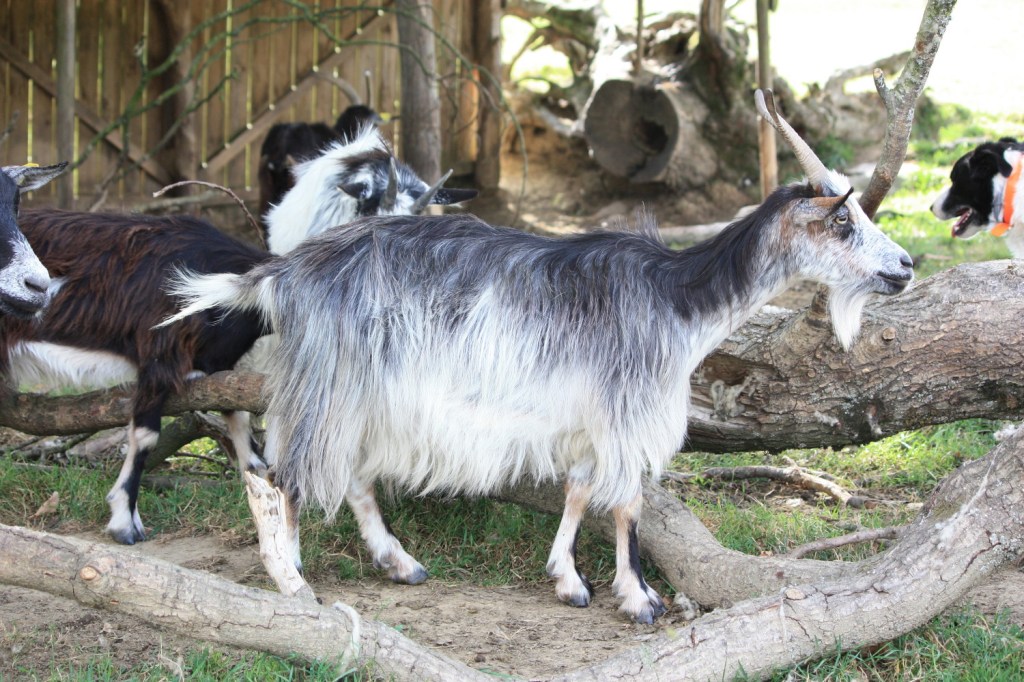
A friend of mine recently reached out to me for some advice on where goats would work best on her Texas property, so I thought I would share here what I shared with her. If you’re thinking about adding goats to your homestead or permaculture system, location matters more than you might think. Goats are excellent at managing brush, invasive plants, and overgrown areas, but placing them in the wrong spot can create headaches instead that diminish any benefits.
One of the first things to consider (as in any permaculture design question) is: what job you want your goats to do? Any element of a garden design (permaculture or not) should be carefully considered for the function, benefits, and drawbacks. Unlike sheep, which prefer grasses, goats are natural browsers that love woody plants, shrubs, and vines. If you have areas overrun with blackberry brambles, poison ivy, or other invasive species, placing goats in those locations can turn a problem area into productive pasture while reducing the need for machinery or herbicides. Most people vastly underestimate just how much area goats can clear in a short period of time, so if you simply have some brush to remove, installing goats full time may not be the best solution.
Fencing is another major factor. Goats are curious, athletic, and often looking for ways to escape. Portable electric netting can help direct grazing animals to specific areas but is expensive. A rotational system allows you to move goats from one section of the property to another, preventing overgrazing while ensuring that vegetation is managed evenly. This approach also gives previously grazed areas time to recover. If you have your goat paddock/pasture in a stationary place, consider how you will transport feed to that area and what plants would work best around the fence. I recommend hardy and woody shrubs and thinking of some sort of hedgerow around at least part of the fence to provide some shelter from wind.
You’ll also want to think about how goats fit into the rest of your permaculture design. Since they convert unwanted vegetation into useful outputs such as manure, milk, or meat, they work best when located where their fertility can benefit the broader system. Areas near future garden spaces, orchards, or degraded land can gain long-term advantages from the nutrients goats leave behind. Especially consider slope. You don’t want your goats in an area where water is always pooling because it will be terrible for their hooves. At the same time, putting their enclosure at the highest point of your property may result in erosion and runoff from that site. I would recommend an easily accessible spot, somewhere nearer to a high point of a slope, this a mini orchard and swales across the slope below the goats to catch, capture, and utilize run off. You may even be able to use that design to grow some grasses and fruit your goats will like.
Ultimately, the best place for goats is where their natural browsing behavior solves a problem while supporting the overall health of your property. By matching goats to brushy areas, using rotational grazing, and integrating them thoughtfully into your landscape, you can transform nuisance vegetation into a valuable resource. When goats are placed strategically, they become much more than livestock; they become active partners in building a productive and resilient permaculture system.




Leave a comment