Designs that seek to restore natural ecosystems and provide abundance
Full designs include loads of information, guides, resources, and details to help manage the site for decades to come.

This property in Blaine, WA is a small city lot that sits almost in a basin at the base of mountainous terrain and atop a long sloping hill that slants toward the ocean. The property has heavy clay, numerous drainage issues, and even sink holes. One of the main strategies was to increase the biomass and soil to create better contours for the water to follow, as well as to help absorb some of the plentiful Pacific Northwest rain. The plant list includes salad, Oregon grape, thornless blackberries, dwarf pear trees, and White Dutch clover. Beds were added to the perimeter to help guide rainwater towards the rain gardens in the front of the property.
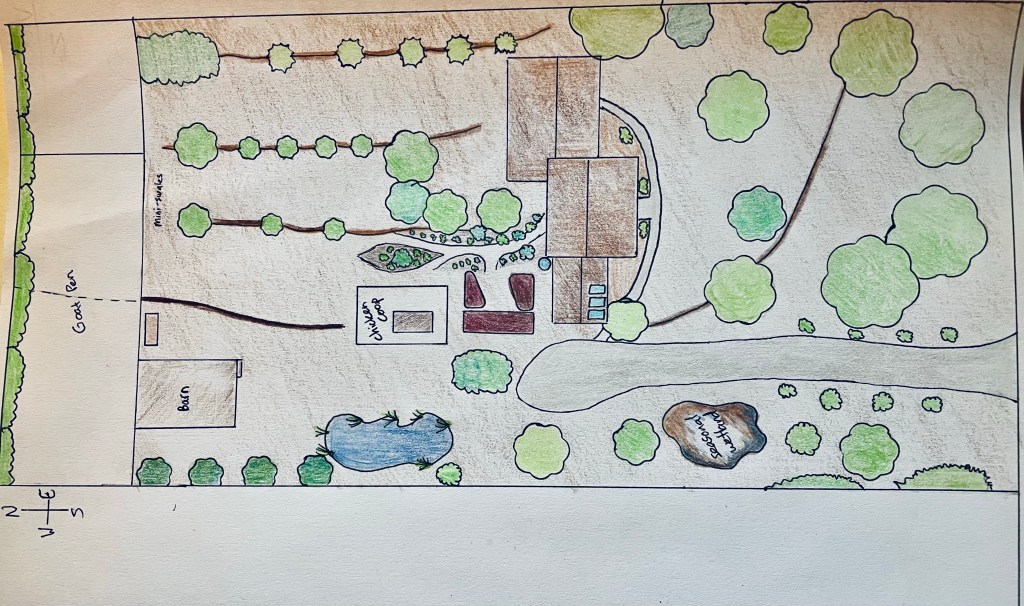
This site just south of Dallas/Fort Worth is on top of a large sloping hill, with numerous runoff points on the neighboring property to the East. This results in massive water runoff that sweeps across the property, eroding the soil. The owner has already done work to spread native wildflowers across the property and the design focuses on adding some linear swales that run north to south on the property. Each swale is planted with native fruit trees and shrubs to slow down the flow of water and to irrigate the new vegetation. The design also includes raised vegetable beds close the house, irrigated by rain barrels and providing a break between the house and the chicken coop.
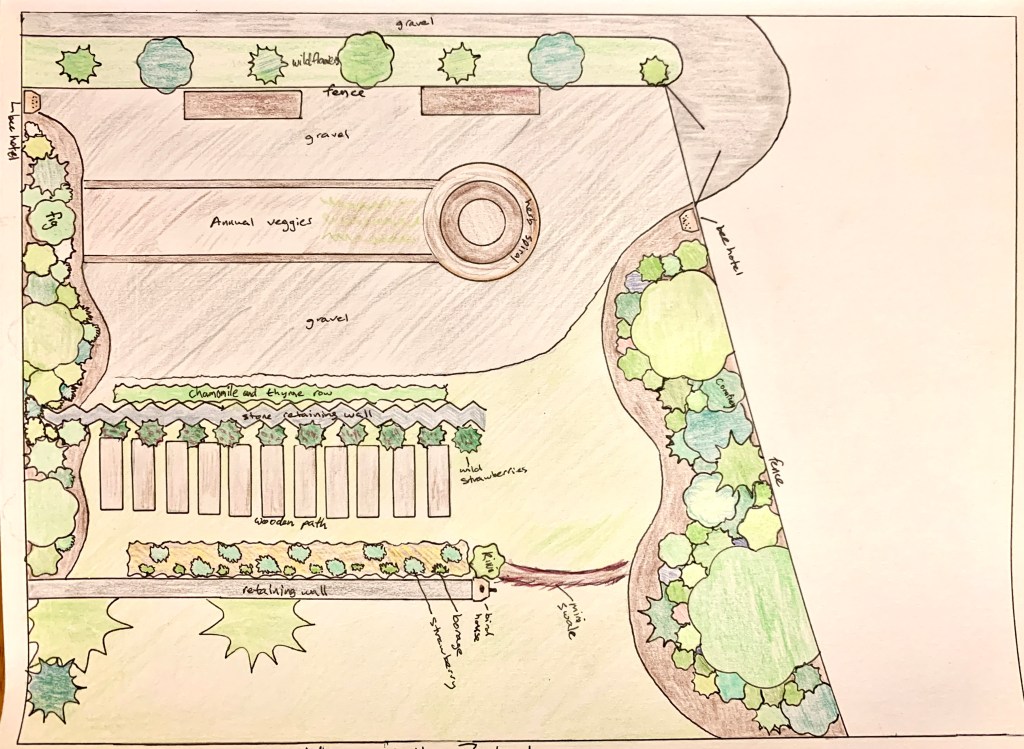
This site sits near the top of a steep slope and a valley that has experienced catastrophic flooding and erosion. Luckily, with enough surrounding native vegetation holding the rest of the hillside together, this lot was less susceptible to the more extreme effects of storms. We focused on stabilizing the ground around the new retaining wall with ground cover like strawberries and native perennial grasses and ground covers. We added dwarf fruit trees around the perimeter to provide shade, food, and more ground stability. The rest of the design focused on an easily accessible small lot food forest that welcomes hungry animals and people.



 Last Ditch